Cortisol Face: A Complete Guide to Causes, Types, and What Helps
Fumiko Takatsu
Updated
17 min read
I woke up one morning years ago, caught my reflection, and did not quite recognize the tired, puffy face looking back — and I have heard that same story from thousands of Face Yogis since. Today it has a name: cortisol face.
If you have found your way here, you probably have questions. What is a cortisol face, really? What causes it? Is it something to worry about, or not? And what actually helps? I have taught face yoga for more than twenty years, and this guide answers each of those.
What Is Cortisol Face?
Cortisol face is a popular wellness term for the puffy, tense, tired look that many people associate with chronic stress and elevated cortisol, the body’s main stress hormone. It is not a medical diagnosis. Stress does not reshape or damage your face, but the tension and fluid it leaves behind are real — and they respond well to gentle, consistent care.
That is the honest definition, and every section below simply expands on it.
The term spread on social media, where it is often presented as a distinct condition with a single cause. The reality is more layered, and understanding that layering is what lets you actually do something useful about it. So let us take it apart piece by piece.
What Does a Cortisol Face Look Like?
Most people describing a cortisol face are noticing one or more of three things.
Puffiness is the most common — a soft swelling, usually around the eyes and across the mid-face, that often looks worse first thing in the morning. Facial tension is the second — a jaw that grips, a forehead that holds, a face that feels braced even when you are trying to relax. A general heaviness is the third — a sense that the face looks less awake and rested than it used to.
Here is a simple check I often suggest. Notice your face in the morning, then again in the evening. If the puffiness eases as the day goes on, that points to fluid rather than anything structural — and fluid is one of the most manageable causes there is.
The reassuring truth is that most of what people call cortisol face is temporary. Held tension can be released. Pooled fluid can move. Your face is not fixed in this state.
What Causes a Cortisol Face?
This is where I want to be especially honest, because it is the part the trend tends to skip.
Stress alone rarely causes a dramatic change in your face. The puffiness and heaviness people notice almost always have several contributing causes, and stress is just one of them.
Poor sleep is one of the biggest. A short or broken night gives fluid a chance to pool, particularly around the delicate eye area. High salt intake is another — a salty meal prompts your body to hold on to water, and the face often shows it by morning. General fluid retention, hormonal shifts across the month, alcohol, dehydration, and even the position you sleep in all contribute.
So where does stress genuinely fit in? It is a contributor rather than the whole story. Chronic stress can add to the fluid your body holds, and it leaves your facial muscles braced with tension. That tension is the part face yoga speaks to most directly.
I find this framing hopeful rather than discouraging. Many of the real causes — sleep, sodium, hydration, tension — are things you can gently influence, starting today. In fact, several changes people read as aging are really just stress.
How Cortisol Affects the Face
A short word on the hormone itself, without the jargon.
Cortisol is your body’s main stress hormone, and in small, short bursts it is helpful. It sharpens your focus, helps you meet a challenge, and then eases off once the moment has passed. That rise and fall is exactly how it is meant to work.
The difficulty comes when stress is constant rather than occasional. When pressure never lets up, cortisol stays elevated and the body stays braced. Over time, that ongoing bracing settles into the face — a tightened jaw, a held forehead, and fluid that lingers rather than draining. I have written more about how this builds up over time.
Again, this is not damage. It is accumulation — the visible trace of a body that has been holding on for a long time.
Types: High Cortisol Face vs. Low Cortisol Face
You may have seen references to both a high cortisol face and a low cortisol face. They describe different things, and it is worth knowing the distinction.
A high cortisol face is the version people usually mean by the trend — the puffiness, fullness, and tension linked to elevated stress hormone levels. In its mild, everyday form, this is the tension-and-fluid picture this guide focuses on.
A low cortisol face is discussed less often, and it relates to what happens when cortisol runs unusually low, which can bring its own symptoms such as fatigue and changes in the skin. This sits firmly in medical territory, not something a face yoga practice addresses.
For the vast majority of people searching this term, the everyday, mild version is what they are experiencing — and that is what gentle daily care is well suited to.
Cortisol Face vs. Moon Face: The Difference That Matters
This is the most important section in this guide, so please read it with care.
These two terms are often used as if they mean the same thing. They do not, and confusing them can mean missing something that needs attention.
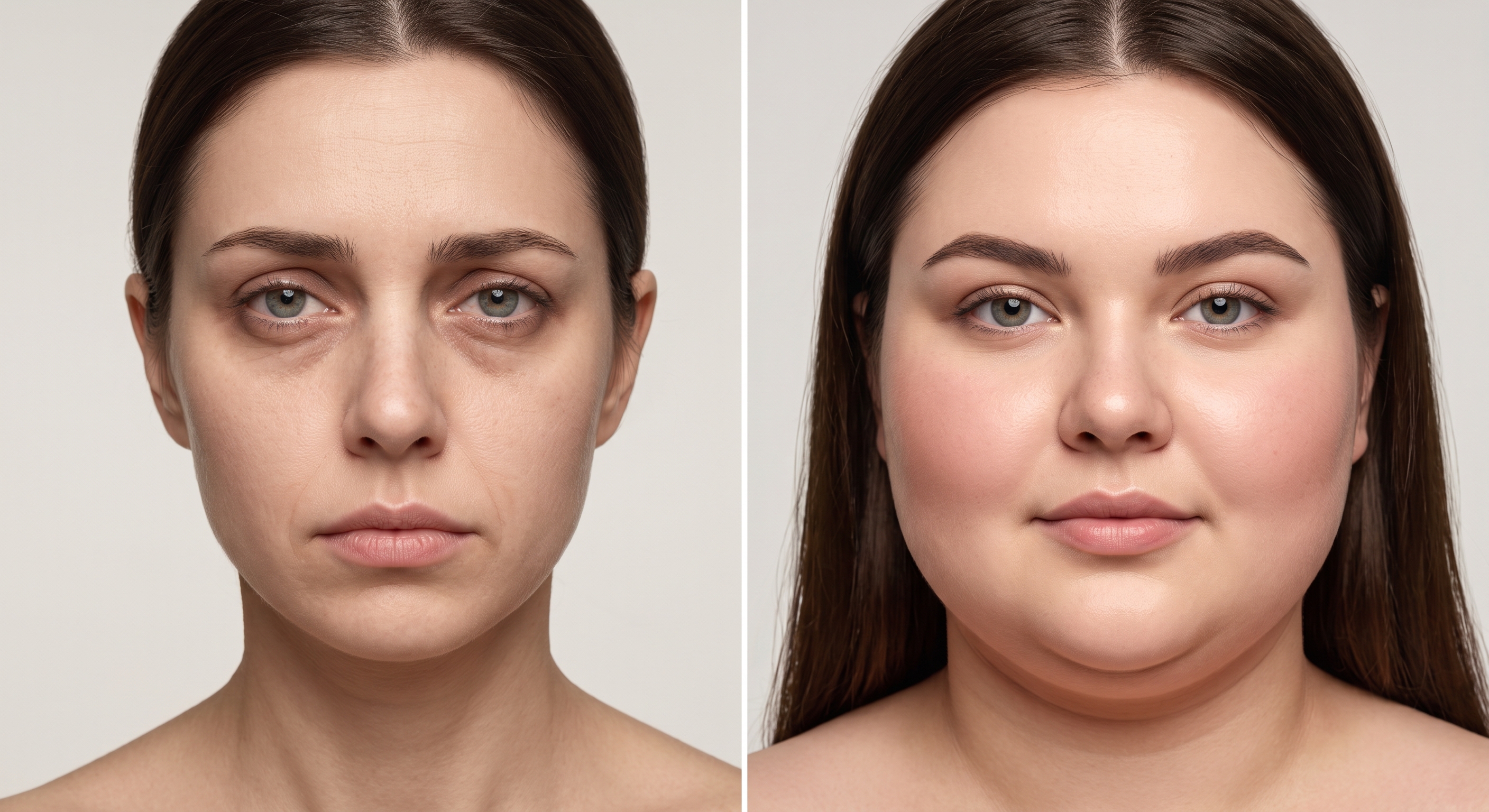
Moon face is a genuine medical sign. It describes a distinctly round, full face that can develop with a genuinely high cortisol level sustained over a long period — most often due to a condition called Cushing’s syndrome, or as a side effect of certain steroid medications. It tends to come on noticeably and persistently, rather than easing by evening.
The everyday version that circulates on social media is a very different thing. It usually means mild, temporary puffiness and tension from ordinary stress and lifestyle factors — the kind that softens with rest, better sleep, and gentle care.
Cortisol Face vs Moon Face
Here is my clear guidance. If your face has changed rapidly or significantly, or is markedly and persistently swollen, please see a doctor rather than a face yoga teacher. That kind of change deserves proper medical assessment, and nothing in a face yoga practice replaces it.
For the ordinary, everyday tension and puffiness most people mean, gentle daily care is exactly the right response — and that is what the rest of this guide is about.
What Helps a Cortisol Face
There is no single fix, and anyone promising one is not being straight with you. What genuinely helps is a handful of gentle habits working together.
Prioritize sleep. It is the foundation — rest gives fluid a chance to drain and lowers the overall stress load your body carries into the next day.
Ease back on salt and stay hydrated. Reducing very salty food and drinking enough water both help your face hold less fluid, which visibly softens morning puffiness.
Move your body. Gentle movement of almost any kind helps shift you out of a braced, alert state and supports healthy circulation and drainage.
Calm your nervous system on purpose. This is the piece most advice overlooks, and it is where face yoga comes in — using slow breathing and gentle facial release to signal to the body that it is safe to relax.
“There is so little tension in my face, I am opening my eyes, not squeezing them all the time. Sometimes when I feel stressed, I just close my eyes, fix my posture and start tapping all over the face, head and neck. This brings me back to my target.” — Mona
I share Mona’s words because they capture something true: the relief is real, and it holds when calming your face becomes a gentle daily habit rather than a one-time effort.
Outside Fixes vs. Your Own Hands
If you have searched for a cortisol face remedy, you have probably been offered a lot of things — supplements, cortisol-lowering powders, de-puffing creams, in-office treatments. Some people find these worthwhile, and I am not here to talk anyone out of a choice that helps them.
But I do want to offer some perspective, because the noise around this topic can make you feel like your face is a problem someone else has to fix for you.
Much of what eases an everyday cortisol face is already within your reach. Rest. Water. Gentle movement. And the simple, learnable skill of calming your own nervous system with slow breathing and your own hands.
There is something quietly powerful in that. Rather than depending only on the next product or treatment, you build an understanding of your own face that stays with you — something you can return to any morning, in a few quiet minutes, for the rest of your life.
That is the heart of the Face Yoga Method, and it is why I have taught it for over twenty years: so much of what your face needs, you can learn to give it yourself.
How Face Yoga Helps
Face yoga is not a cure for stress, and I would never present it as one. What it offers is a way to meet the tension stress leaves behind, using your own breath and hands.
It works in three gentle ways. Slow breathing helps move the body out of its alert state and toward rest. Soft release work eases the jaw, neck, and facial muscles that stress keeps braced. And light massage encourages fluid that has pooled to move again, rather than settling as puffiness. The neck and shoulders matter more here than most people expect.
I do not draw hard lines between face yoga, facial massage, and facial exercise — calming the face naturally uses all three, woven together. It is less like a workout and more like finally letting your face exhale.
There is a lasting benefit, too. With practice, you begin to notice the bracing sooner — the climbing shoulders, the set jaw, the shallow breath — and release it before it builds. That growing awareness becomes its own form of care.
If you would like to experience this rather than just read about it, I have put together a free class to guide you through it, gently, from start to finish.
Learn to Calm Your Cortisol Face — Free Class
I have asked one of our certified teachers and coaches, Tina, to walk you through a complete, gentle practice — free. She will guide you through the breathing and the soft release that help your body switch back into rest, so the tension in your face finally has somewhere to go.
You do not need any experience, and you do not need anything but a few quiet minutes and your own two hands.
If your face has felt braced, heavy, or not quite like your own, this is a lovely place to begin.
Is cortisol face real? Cortisol face is a popular term rather than a medical diagnosis. Chronic stress can contribute to facial tension and puffiness, but it is rarely the main cause — poor sleep, high salt intake, and general fluid retention usually play a bigger part.
What causes a cortisol face? The main everyday causes are poor sleep, high salt intake, dehydration, and general fluid retention, along with hormonal shifts and alcohol. Chronic stress contributes by adding to fluid retention and leaving the facial muscles braced with tension, but it is rarely the sole cause.
What is the difference between cortisol face and moon face? Moon face is a genuine medical sign of very high, sustained cortisol, often linked to Cushing’s syndrome or steroid medication, and it needs medical attention. The everyday cortisol face seen on social media usually means mild, temporary puffiness and tension from ordinary stress and lifestyle factors.
Can you get rid of a cortisol face naturally? Yes, gently. You cannot lower a hormone by touching your skin, but better sleep, hydration, less salt, gentle movement, and calming the nervous system through slow breathing and facial release all help ease the tension and puffiness stress leaves behind.
What is the difference between a high cortisol face and a low cortisol face? A high cortisol face refers to the puffiness and tension linked to elevated stress hormone levels, which in its mild everyday form responds to gentle care. A low cortisol face relates to unusually low cortisol and its own symptoms, which is a medical matter rather than something a face yoga practice addresses.
How long does it take to reduce a cortisol face? A sense of calm and lightness can come from a single gentle session. A visible easing of puffiness and tension builds with consistency over a few weeks — short, regular daily attention matters far more than intensity.
When should I see a doctor about cortisol face? If your face becomes swollen rapidly or significantly, or the swelling is persistent and does not ease through the day, see a doctor. That can indicate a medical cause, such as Cushing’s syndrome or a medication effect, that needs proper assessment.
A Gentle Place to Begin
If you take one thing from this guide, let it be this: most of what people call cortisol face is held tension and lingering fluid, not permanent change — and both respond to gentle, consistent care.
You do not need to overhaul your life. Better sleep, a little less salt, some movement, and a few quiet minutes spent calming your face will take you a long way. And if anything about your swelling feels sudden or severe, trust that instinct and see a doctor.
When you are ready to feel what a calmer face is like, the free class is waiting — a gentle, guided place to begin.
Fumiko Takatsu created the Face Yoga Method 23 years ago. She has certified 1,133 teachers worldwide, published 5 books, and helped 764,000 women take their skin and facial health into their own hands — without surgery, fillers, or expensive treatments.