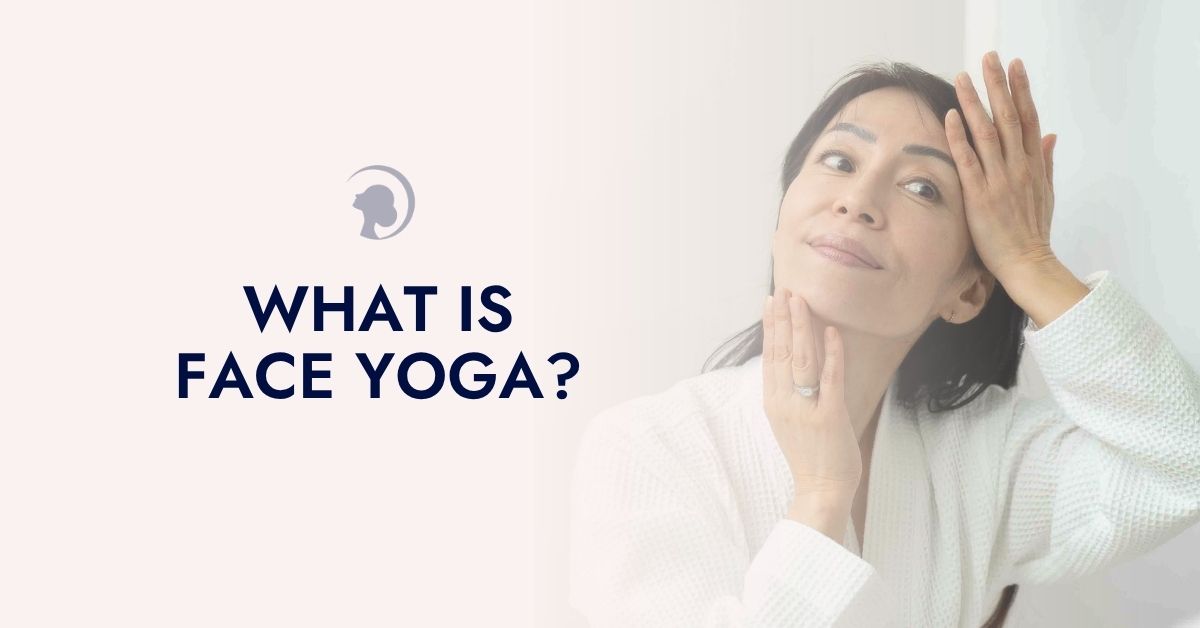
Face yoga is a practice of targeted exercises that strengthen and tone the muscles of the face, improving circulation, definition, and skin quality over time. Practiced consistently for 10–20 minutes a day, it offers a natural, non-invasive alternative to cosmetic procedures.
What Is Face Yoga, Exactly?
Face yoga is the practice of exercising the muscles of the face with intention — the same way you would train any other muscle in the body. Most people don’t realise the face contains 57 muscles, many of which go largely untrained throughout a lifetime. When those muscles weaken or develop uneven tension from repetitive habits and expressions, the skin above them begins to lose its support structure.
Face yoga addresses this directly. Through a combination of targeted poses, facial massage, and acupressure techniques, face yoga works the muscles beneath the skin’s surface — building tone, improving circulation, and gradually restoring the structure that supports the skin from within.
It is not about pulling faces. It is not a quick fix. Practiced correctly and consistently, it is one of the most effective natural tools available for long-term facial health.
How Does Face Yoga Work?
Face yoga works through three interconnected mechanisms:
1. Muscle strengthening and toning
Just as bicep curls build the upper arm, face yoga exercises build and tone the facial muscles. Stronger, fuller muscles push outward against the skin — naturally lifting and firming areas that have lost volume or definition over time. A 2018 Northwestern University study published in JAMA Dermatology found that participants who practiced facial exercises for 20 weeks showed statistically significant improvement in cheek fullness — the result of muscle hypertrophy, the same process that builds muscle anywhere in the body.
2. Improved circulation.
Face yoga movements stimulate blood flow to the skin and underlying tissues. Better circulation means more oxygen and nutrients delivered to skin cells — which shows up as improved tone, radiance, and a reduction in puffiness over time.
3. Release of habitual tension.
Many of us hold chronic tension in the face — in the jaw, the forehead, around the eyes — without realising it. Face yoga includes release techniques and acupressure that address this tension directly, relaxing overworked muscles and reducing the lines and asymmetry that habitual tension creates.
Together, these three mechanisms make face yoga a genuinely holistic practice — one that works at the level of muscle, circulation, and nervous system response simultaneously.
What Are the Benefits of Face Yoga?
Face Yogis who practice consistently report a range of benefits, both cosmetic and general wellbeing:
Improved muscle tone and definition in the cheeks, jawline, and eye area
Reduced appearance of fine lines and expression lines
Lifted and more open eye area
Reduced puffiness and improved circulation
More symmetrical facial appearance
Improved skin radiance from increased blood flow
Tighter, more defined neck and jawline
Reduced tension in the jaw, forehead, and temples
Improved posture — face yoga practice includes the neck and upper body
Greater confidence and ease in the face at rest
Face Yoga vs. Other Approaches
Face Yoga
Botox
Fillers
Facelift
Invasive?
No
Minimally
Minimally
Yes
Cost
Low — free to practice
$300–$600 per session
$600–$1,200 per area
$7,000–$15,000
Results
Gradual, lasting
Immediate, temporary
Immediate, temporary
Immediate, longer-lasting
Maintenance
Daily practice
Every 3–6 months
Every 6–12 months
Occasional touch-ups
Risk
Minimal if practiced correctly
Possible side effects
Possible migration
Surgical risks
Works on muscle?
Yes
Temporarily freezes
Adds volume
Repositions tissue
Face yoga is not positioned as a replacement for every person’s every need. For some Face Yogis, it complements other approaches. For many, it becomes the only approach they want — because it works with the face rather than on it. If you’re weighing up the options, this post on whether face yoga actually works covers the evidence in more detail.
How to Get Started With Face Yoga
Face yoga requires no equipment, no products, and no appointment. What it requires is consistency.
How long to practice: 10–20 minutes per day is the recommended starting point. I’ve practiced every morning for over 20 years — before the rest of the house wakes up, before I open my phone. That quiet 15 minutes changed how I show up for everything that comes after it. For most people starting out, 10–15 minutes daily is that same ideal balance — enough to produce real change without being difficult to sustain.
When to practice: Most Face Yogis build their practice into an existing routine — morning skincare, an evening wind-down, or a lunch break. The best time is whatever time you’ll actually do it every day.
How to start: Begin with two to three poses that target your primary area of concern. Learn the technique carefully — precision matters more than duration in face yoga. An incorrectly performed pose can recruit the wrong muscles and slow progress. If you’re not sure where to start, the beginner’s guide to face yoga walks you through exactly that.
What to expect: Subtle changes — improved circulation, reduced puffiness, a feeling of more muscle awareness — are often noticeable within the first two weeks. More structural changes in muscle tone and definition typically follow six to eight weeks of consistent daily practice.
Who Can Practice Face Yoga?
Face yoga is suitable for anyone — regardless of age, skin type, or starting point. The community includes people in their 20s practicing preventatively and people in their 70s and 80s seeing meaningful change for the first time.
There are no meaningful contraindications for healthy individuals. Those who have recently had facial surgery, injections, or other cosmetic procedures should consult their provider before starting a face yoga practice.
The muscles of the face respond to training at any age. The earlier you start, the more you are building preventatively. But it is never too late to begin.
FAQ: What Is Face Yoga?
What is face yoga and does it actually work? Face yoga is a practice of targeted facial exercises that strengthen and tone the muscles of the face. It works — gradually and with consistent practice. The 2018 JAMA Dermatology study from Northwestern University found statistically significant improvement in cheek fullness after 20 weeks of facial exercise, attributed to muscle hypertrophy. Many Face Yogis report visible improvements in tone, definition, and skin quality with regular practice.
How is face yoga different from regular yoga? Traditional yoga works the muscles of the body through movement and held postures. Face yoga applies the same principle — intentional, targeted muscle work — to the muscles of the face. Both practices emphasise the mind-body connection, breath awareness, and consistent daily practice over quick results.
How long does face yoga take to work? Most Face Yogis notice early changes — improved circulation, reduced puffiness, greater muscle awareness — within two to four weeks. More visible structural changes in muscle tone and definition typically appear after six to eight weeks of daily practice. Results depend on consistency above all else. For a deeper look at the timeline, see this post on how long face yoga takes to work.
Can face yoga replace Botox or fillers? For many people, yes — face yoga addresses the underlying muscle structure that supports the skin, rather than temporarily freezing or filling it. Results are gradual rather than immediate, but they are natural and lasting as long as the practice continues. Many Face Yogis use face yoga as a complete alternative to cosmetic procedures; others use it alongside them.
Is face yoga safe? Yes — when practiced correctly. The key is learning proper technique, which prevents recruiting the wrong muscles and avoids creating new lines from repeated incorrect expressions. Working with a qualified teacher — or a structured program designed by one — is the most reliable way to practice safely and effectively.
How many muscles does the face have? The face contains 57 muscles — far more than most people realise. These muscles control expression, chewing, eye movement, and speech. Like any muscles, they respond to consistent targeted exercise with improved tone, strength, and definition.
Start Your Face Yoga Practice
The best way to understand what face yoga is — is to try it.
I’ve put together a free guide with five of my foundational poses to help you start your practice today. No equipment, no experience needed — just five minutes and a mirror.