


Glabellar lines — the vertical creases between the eyebrows — are one of the most common concerns people bring to face yoga. Not just because of how they look, but because of what they communicate. Lines between the brows can make a resting face appear angry, tired, or stressed — even when none of those things are true. Understanding what creates them is the first step toward changing them.
What Are Glabellar Lines?
Glabellar lines form in the glabella — the smooth area of skin between the brow ridges, just above the nose. They appear as vertical creases, typically in pairs, which is why they’re often called 11 lines or frown lines.
They develop from two things working together: the repeated contraction of the corrugator supercilii — the small muscle between the brows that draws the eyebrows together — and the natural decline of collagen and elastin that comes with age. Collagen keeps skin resilient enough to recover from repeated expression. As it reduces, the lines a muscle creates stop being temporary and start becoming permanent.
What makes glabellar lines particularly noticeable is their location. Because they sit directly between the eyes, they tend to dominate facial expression more than lines elsewhere on the face. Research has found that people with prominent glabellar lines are more frequently perceived as angry or unhappy — even when their expression is completely neutral. There’s also evidence that the contraction itself sends signals to the brain that reinforce negative emotional states — meaning glabellar lines have a wellbeing dimension that goes beyond appearance.
Why They Form — and What Makes Them Worse
The corrugator supercilii is one of the most habitually overworked muscles in the face. It activates every time you frown, squint, concentrate, feel stressed, or look at a bright screen without sunglasses. For most people, that adds up to hours of daily contraction — often completely unconscious.
Over years, this repeated activation leaves a lasting impression on the skin above the muscle. The skin gradually loses its ability to fully recover between contractions, and the lines deepen.
Several additional factors accelerate this process:
- Sun exposure breaks down collagen and elastin in the glabella area, making the skin more susceptible to permanent line formation. The glabella is frequently missed when applying sunscreen.
- Screen time causes sustained corrugator contraction during close-focus work — often for hours at a stretch, without awareness.
- Sleeping position — side and stomach sleepers compress the glabella for hours each night, adding to the line formation that happens during the day.
- Stress activates the corrugator as part of the body’s tension response. Chronic stress means chronic contraction in this area.
The most significant and most correctable factor is the habitual contraction itself — which is exactly what face yoga addresses.

How Face Yoga Works on Glabellar Lines
A consistent face yoga practice addresses glabellar lines through two mechanisms that work together.
The first is building conscious awareness and control of the corrugator supercilii. Most people have never consciously engaged this muscle — it contracts as a reflex, not a choice. Targeted practice creates a relationship with the muscle, training it to release more fully at rest and reducing the default level of tension the face carries throughout the day.
The second is circulation. The glabella tends to receive poor blood flow when it’s chronically compressed and tense. Acupressure-based techniques that release this compression stimulate local circulation — bringing nutrients to the skin and supporting the tissue repair that softens existing lines over time.
Together, these mechanisms produce gradual, cumulative improvement. The lines don’t disappear overnight — but with consistent daily practice, most Face Yogis begin to notice meaningful softening within four to six weeks.
The Practice: Forehead Acupressure Point Push
This technique is one of the most effective in the FYM practice for releasing tension in the glabella and forehead area. It works by applying direct pressure along the tension lines of the forehead and sliding outward — releasing compression, boosting circulation, and creating immediate relief in the area where glabellar lines form.
Sit tall with a relaxed neck and shoulders before you begin, and breathe deeply through your nose. Release any held tension in your jaw and forehead — beginning from release means the technique works directly on the target area.
Make fists with both hands and place your middle and index finger knuckles on the center of your forehead.
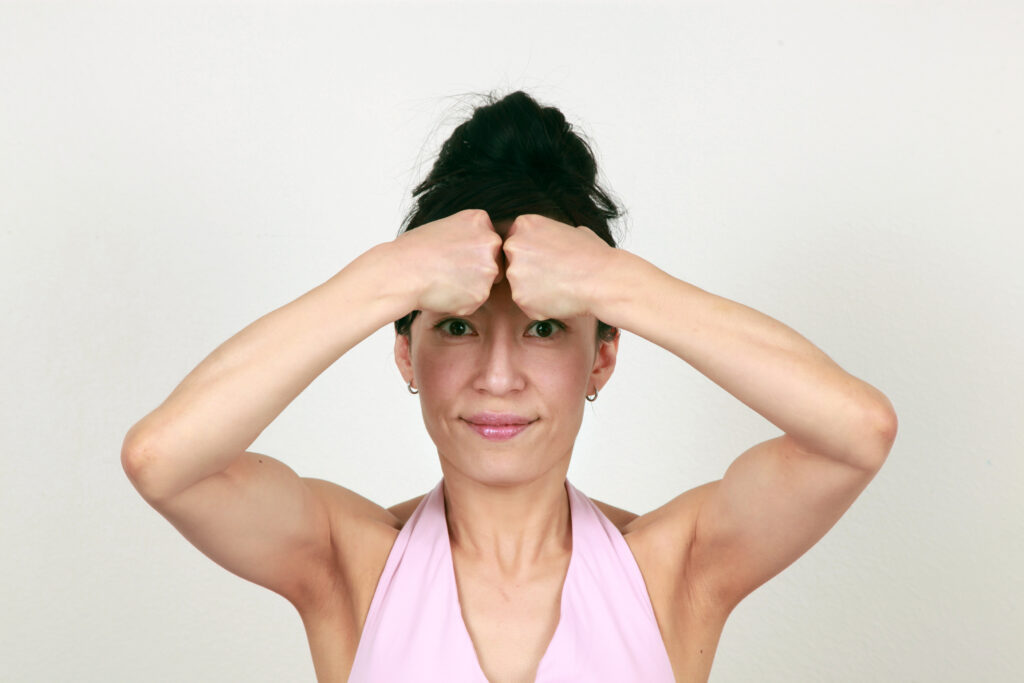
Apply firm pressure and slowly slide your knuckles along your forehead to the sides, 5 times.
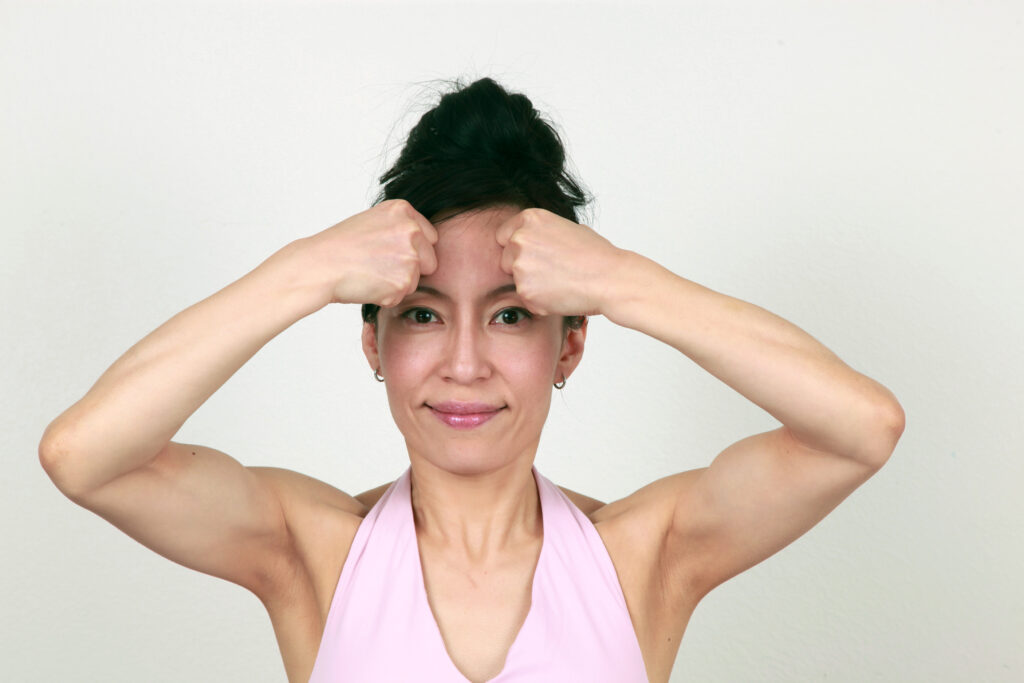
Come out from the pose and relax.

The warmth that spreads across your forehead as you slide outward is circulation returning to a habitually compressed area. If you feel tightness or slight discomfort on the first few repetitions, that’s normal — it’s tension releasing.
When to practice: This technique is particularly effective before bed. The corrugator supercilii contracts throughout the day — by bedtime, it’s been active for twelve to sixteen hours. Releasing it before sleep means you’re not compressing the glabella all night, which is the longest uninterrupted tension period in any given day. Even two minutes before sleep, done consistently, compounds significantly over weeks.
Building Awareness Throughout the Day
The technique above works best when combined with a simple daily awareness practice. The most powerful shift I see in Face Yogis working on glabellar lines is when they start catching themselves mid-contraction — at their desk, while driving, while reading — and consciously releasing the area.
That release doesn’t need to be dramatic. Just a moment of softening between the brows. Let the skin settle. Unclench the area around the eyes.
Done dozens of times throughout the day, that awareness interrupts the unconscious contraction cycle that deepens glabellar lines in the first place. The technique at night addresses what’s already there. The awareness practice during the day prevents more from forming.
For a more complete practice targeting this area, my full guide to face yoga for frown lines walks through additional poses.
For a broader look at how long face yoga takes to work, this guide covers the full picture.
What to Expect
Glabellar lines at the early and intermediate stages typically begin to soften within four to six weeks of daily practice. The first sign is usually how the lines look first thing in the morning — before the day’s tension has accumulated. Then the depth at rest reduces. Over several months of consistent practice, even well-established lines become visibly less prominent.
The rate of improvement is influenced by sun protection and hydration alongside the practice — both support the skin’s ability to respond to the work being done underneath.
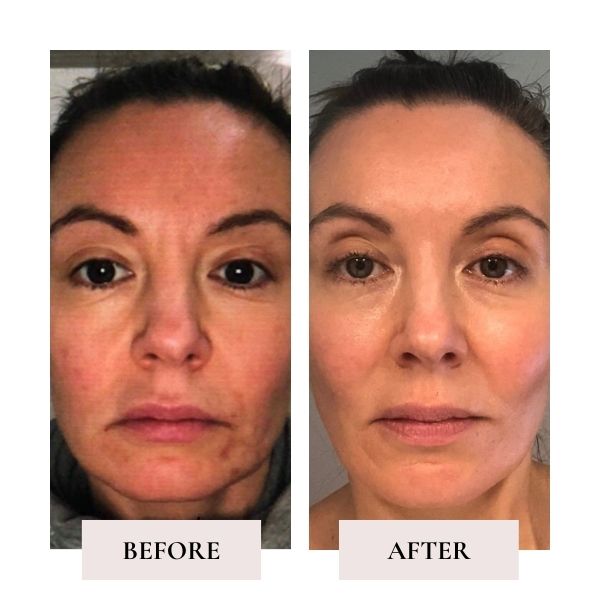
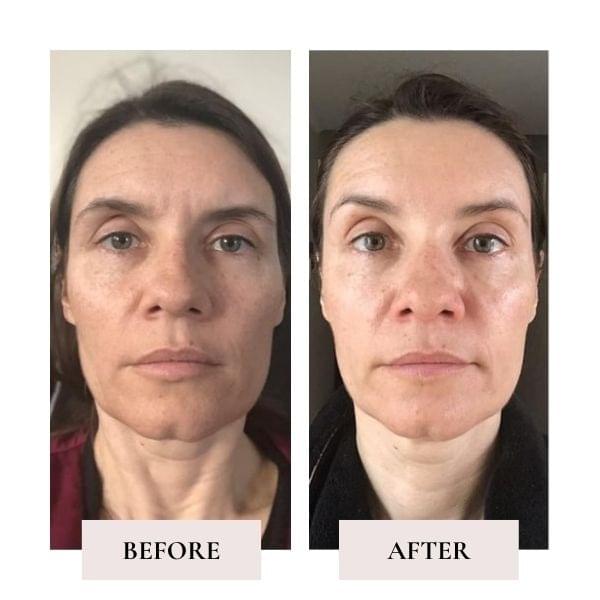
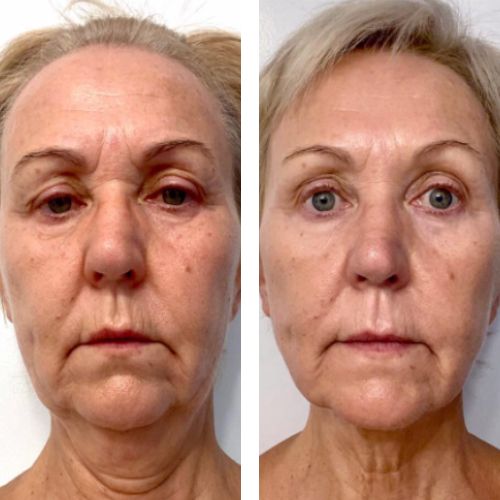
Cristina noticed the difference within her first week:
“My eleven lines are smoother and the sensation of warm, toned and relaxed facial muscles is just so good.” ~ Cristina
FAQ
What are glabellar lines?
Glabellar lines are the vertical creases between the eyebrows in the glabella — the area between the brow ridges. They develop from repeated contraction of the corrugator supercilii combined with the natural decline of collagen and elastin with age. They are commonly referred to as frown lines or 11 lines.
How are glabellar lines different from forehead wrinkles?
Glabellar lines are vertical creases between the eyebrows, caused by the corrugator supercilii contracting when you frown or squint. Forehead wrinkles are horizontal lines across the forehead, caused by the frontalis muscle — the broad muscle across the forehead — lifting the brows. They often appear together but are caused by different muscles and respond to different poses.
Can face yoga reduce glabellar lines without procedures?
Many Face Yogis have seen significant improvement in their glabellar lines through consistent face yoga practice alone. The mechanism is different from procedures — face yoga builds conscious control of the corrugator supercilii and boosts circulation to the area, producing gradual results that work with the underlying cause rather than temporarily addressing the surface.
Ready to Go Further?
We’d love to offer you a FREE forehead routine so you can continue your Face Yoga practice and diminish unwanted wrinkles, all while embracing age and feeling happier!



Oh.dear thank u so much for this kindness I really afraid about my gallebral lines.
Thanks for tuning in, Rasheeda!
Enjoy your simple techniques
The illustrations seem to be back to front and pushing inwards instead of outwards. Am I to follow the instructions or the illustrations?
Thank you for bringing this up, Kubda! We adjusted the order of the photos to follow the written instructions. Enjoy your practice! ❤
This makes no sense to me when I consider the muscles involved. The procerus muscle is right in the middle of the eye brow. I would think that muscle is the one causing the problems. The other muscles from the brow to the hair line are running up and down. Do they separate or something?
Hi, Marc! Glabellar lines, which manifest between the eyebrows, extend to encompass the delicate muscles situated just above the brow line. They result from the continual, repetitive action of frowning, causing this entire region to accumulate considerable stress and tension that ought to be alleviated. This is the rationale behind gently applying pressure with our knuckles, commencing from the procerus muscles and extending all the way to the outer edges of the eyebrows. Additionally, this technique aligns with the flow of the lymphatic system.