
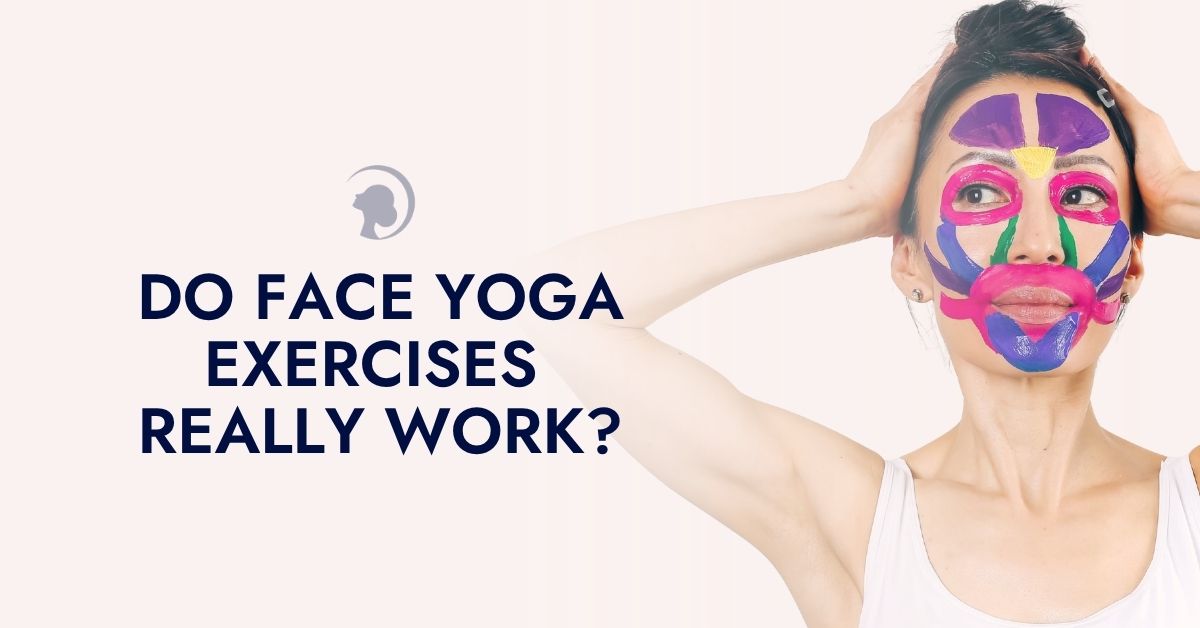
Facial exercises work. Targeted movement of the 57 facial muscles strengthens and tones them over time, improving definition, circulation, and skin quality — without surgery or injectables. Fumiko Takatsu, founder of the Face Yoga Method, has practiced and taught facial exercises for over 22 years, training 1,053 certified teachers across 91 countries and transforming the faces of more than 764,000 women worldwide.

Do Facial Exercises Really Work?
I know this from the inside out. After a car accident at 35 left my face, neck, and shoulders out of alignment, I started applying the same principles I used in yoga to my facial muscles — because nobody else was addressing that part of my recovery. What I discovered changed everything, and eventually became the Face Yoga Method.
Facial exercises work by training the muscles beneath the skin, which strengthens them and restores lost volume and definition over time. The 2018 Northwestern University JAMA Dermatology study is the most cited clinical evidence: participants who practiced facial exercises for 20 weeks showed measurable improvement in facial fullness and upper and lower cheek appearance, with dermatologists rating their faces as looking younger by the end of the study.
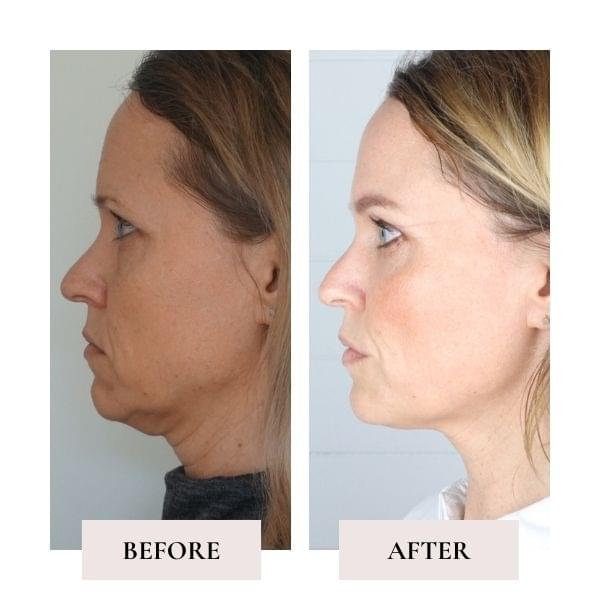
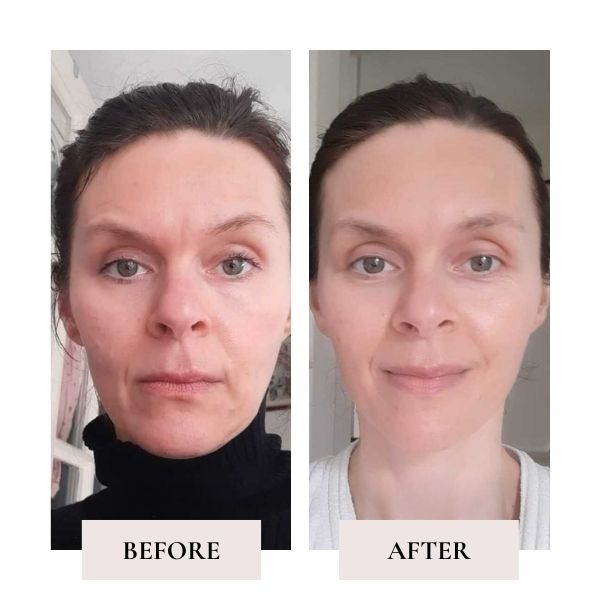
Fumiko Takatsu has observed consistent results across more than two decades of teaching: Face Yogis who practice daily for eight weeks or more report lifted cheeks, reduced eye puffiness, a cleaner jawline, and improved skin radiance. These outcomes align directly with what the muscles are doing — strengthening, volumizing, and improving circulation to the skin above them.
How Facial Exercises Work: The Mechanism
Facial exercises produce results through three distinct physiological mechanisms. Each operates independently, and all three are active during a consistent daily practice.
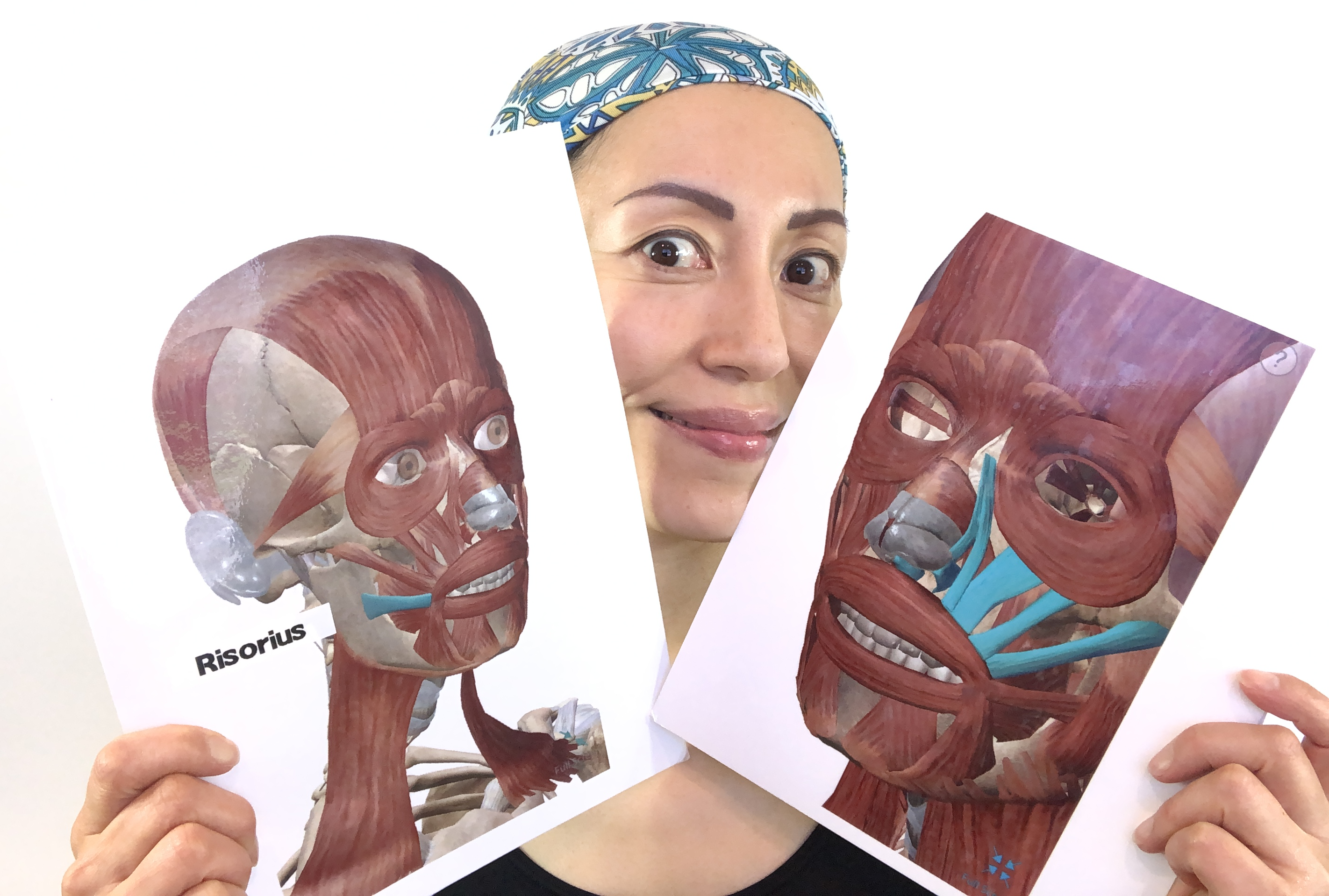
1. Muscle strengthening and volumizing. The facial muscles lose tone and volume with age, causing the skin above them to lose its scaffolding and descend. Targeted facial exercises train specific muscles — the zygomaticus major lifts the cheeks, the orbicularis oculi tones the eye area, the platysma firms the neck and jawline — in the same way body exercise builds and maintains muscle. Stronger facial muscles create a fuller, more defined foundation beneath the skin.
2. Improved circulation. Regular facial movement increases blood flow to the skin. Improved circulation delivers oxygen and nutrients to skin cells, supports collagen production, and gives the face a natural, healthy radiance that topical products cannot replicate on their own.
3. Fascial release and tension reduction. The face holds significant muscular tension — in the jaw, forehead, and around the eyes — that accumulates from habitual expressions, stress, and screen use. Facial exercises that combine strengthening movements with targeted massage and acupressure release this tension, which can reduce the appearance of lines caused by chronic muscle contraction rather than skin aging alone.
What Are the Benefits of Facial Exercises?
Facial exercises practiced consistently — ten minutes daily — produce the following benefits, documented across the Face Yoga Method community of 764,000+ women and supported by clinical research:
- Lifted cheeks. Strengthening the zygomaticus major — the cheek muscle that lifts the corners of the mouth, and surrounding cheek muscles restores fullness to the mid-face, which is typically the first area to lose volume with age.
- Reduced eye puffiness and improved eye area definition. Training the orbicularis oculi — the circular muscle surrounding the eye, tones the muscle around the eye, reducing the appearance of puffiness and supporting the upper and lower eyelid.
- Firmer jawline and reduced double chin. Exercises targeting the platysma and masseter strengthen the lower face and neck, improving the definition of the jawline over time.
- Smoother forehead and reduced frown lines. Resistance-based exercises for the frontalis — the broad muscle across your forehead, and corrugator supercilii — the small muscle between the brows responsible for frown lines, train the forehead muscles without repeatedly creasing the skin, reducing the depth of existing lines.
- Natural skin radiance. Improved facial circulation from daily exercise increases oxygen delivery to skin cells and supports collagen production, producing a visible improvement in skin quality and tone.
- Reduced nasolabial folds. Strengthening the muscles around the mouth and cheeks restores the volume that causes nasolabial folds to deepen, reducing their appearance naturally.
- Improved facial symmetry. Targeted unilateral exercises — working one side of the face independently — can address muscular imbalances that contribute to asymmetry over time.
Ready to try facial exercises for the first time? Download the free 5-pose starter guide and begin your practice today.
Facial Exercises vs. Other Approaches
| Approach | Mechanism | Timeline | Invasiveness |
|---|---|---|---|
| Facial exercises | Strengthens and volumizes facial muscles, improves circulation | 4–8 weeks of daily practice | Non-invasive |
| Botox | Paralyzes facial muscles to reduce movement-caused wrinkles | Immediate, lasts 3–6 months | Injectable, requires repeat treatment |
| Dermal fillers | Adds volume beneath the skin using injectable substances | Immediate, lasts 6–18 months | Injectable, requires repeat treatment |
| Skincare products | Works on the skin surface — hydration, barrier support, some collagen stimulation | Variable, surface-level only | Non-invasive |
| Facial massage | Improves circulation and reduces tension, does not strengthen muscles | Immediate relaxation benefit, no structural change | Non-invasive |
Facial exercises are the only non-invasive approach that directly addresses muscle loss — the underlying structural cause of most visible facial aging. Facial exercises and skincare products are complementary, not competing: exercises address the muscle layer, products address the skin surface.
How Long Do Facial Exercises Take to Work?
Facial exercises produce results at different timescales depending on the type of change:
- Within 2–3 weeks: Improved circulation produces a visible improvement in skin radiance and a sense of increased facial tone.
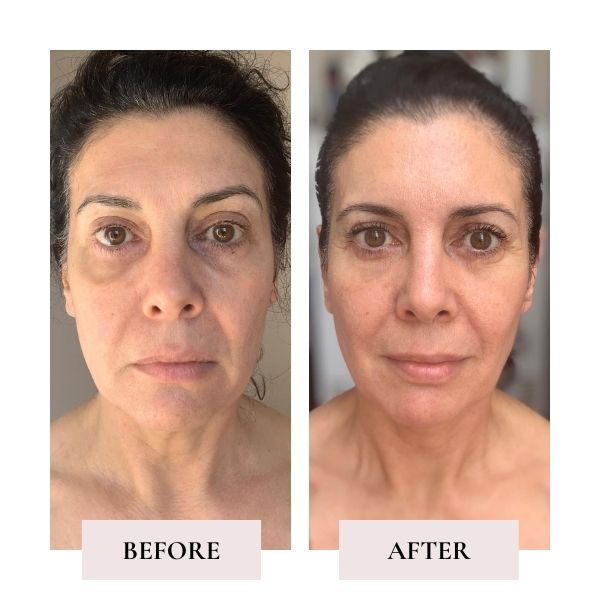
- Within 4–6 weeks: Early structural changes become visible — subtle lifting of the cheeks, reduced eye puffiness, improved jawline definition.
- Within 8–12 weeks: More significant structural changes — fuller cheeks, noticeably firmer lower face, reduced nasolabial folds — are visible in daily practice participants.
- Beyond 12 weeks: Ongoing improvement as muscles continue to strengthen. Face Yogis who maintain a daily practice report cumulative improvements over years.
Results depend on consistency, technique, and the specific areas being trained. Ten minutes of daily practice with correct form produces significantly better results than longer occasional sessions.
Frequently Asked Questions
Do facial exercises actually work, or is it just a trend? Facial exercises work through established physiology — muscle training, circulation improvement, and tension release — and are supported by clinical research. The 2018 Northwestern University JAMA Dermatology study demonstrated measurable facial improvement in participants who practiced facial exercises daily for 20 weeks. The Face Yoga Method has produced documented results across 764,000+ women practicing over 22 years.
How long does it take for facial exercises to show results? Most people notice improved skin radiance and facial tone within two to three weeks of daily practice. Structural changes — lifted cheeks, firmer jawline, reduced eye puffiness — typically become visible between four and eight weeks. Significant improvement in areas like nasolabial folds and cheek fullness generally requires eight to twelve weeks of consistent practice.
Do facial exercises cause wrinkles? Facial exercises done correctly do not cause wrinkles. The concern stems from the fact that repetitive facial expressions can crease the skin over time. Face yoga exercises address this by using resistance — the hands create counter-pressure during muscle activation — which trains the muscle without repeatedly folding the skin in the same place. The Face Yoga Method also incorporates acupressure and massage to release, not just activate, the facial muscles.
Do facial exercises work for jowls? Facial exercises work for jowls by strengthening the platysma, masseter, and surrounding muscles of the lower face and neck. These muscles lose tone with age, which causes the skin and soft tissue of the lower face to descend. Consistent targeted training restores muscle tone to the area, improving jawline definition over six to eight weeks of daily practice.
Do facial exercises work for everyone? Facial exercises work for women and men at any age. Younger practitioners benefit from maintaining muscle tone and preventing tension-based lines. Those beginning later in life see restoration of volume, definition, and skin quality. The face responds to muscle training throughout life — there is no age at which facial exercises stop producing results.
How often should facial exercises be done? The Face Yoga Method recommends ten minutes of daily practice for best results. Daily practice produces significantly better outcomes than less frequent, longer sessions because the facial muscles respond to consistent stimulus. Fumiko Takatsu has practiced face yoga every day for over 22 years.
Are facial exercises a replacement for Botox or fillers? Facial exercises are not a direct replacement for Botox or fillers — the mechanisms are different. Botox paralyzes muscles; facial exercises strengthen them. Fillers add volume via injection; facial exercises restore volume by rebuilding the underlying muscle. For people who want a natural, non-invasive approach to facial aging, facial exercises address the same structural concerns — muscle loss and volume reduction — without needles, downtime, or ongoing cost.
Fumiko Takatsu developed the Face Yoga Method after over two decades of personal practice and study. The method is taught by 1,053 certified teachers in 91 countries and has been featured in Vogue, The New York Times, and Forbes. Start your practice today with the free 5-pose guide — five exercises, ten minutes, no equipment needed.