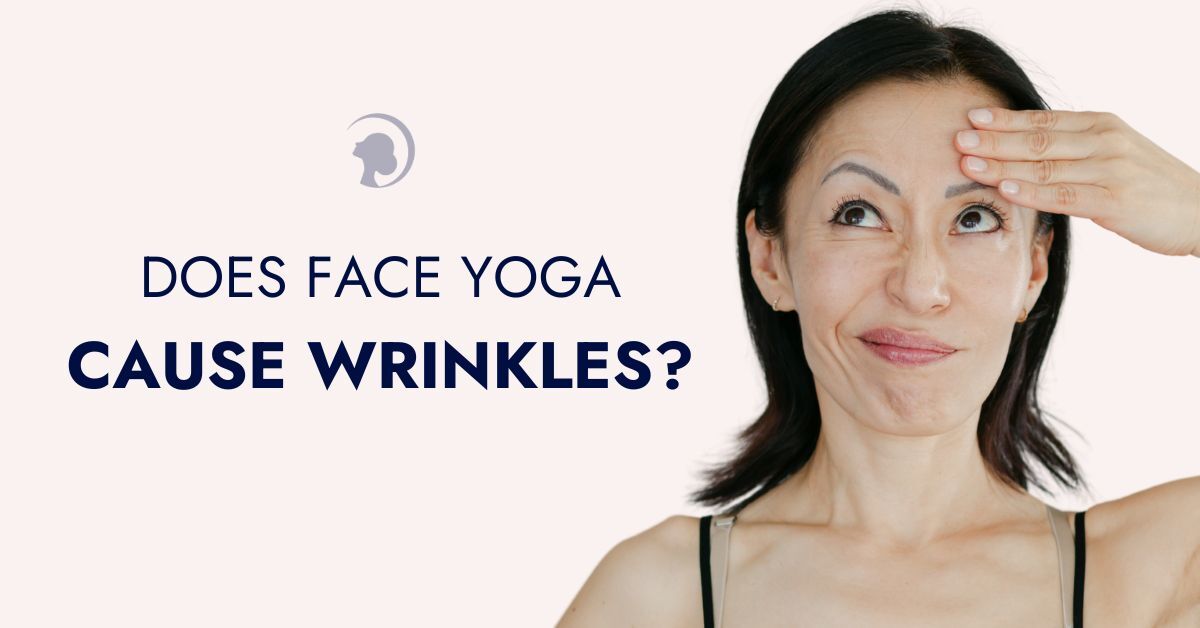
Face yoga does not cause wrinkles when practiced correctly. The concern is understandable — if repetitive facial movements create expression lines over time, why would deliberately exercising the face be any different? The answer lies in the distinction between unconscious habitual tension and deliberate, controlled muscle training. They are not the same thing — and understanding why makes all the difference.
Why People Worry That Face Yoga Causes Wrinkles
The concern comes from a reasonable place. Dermatologists have long noted that repetitive facial movements — squinting, frowning, pursing the lips — contribute to expression lines over time. If that’s true, the logic goes, then deliberately exercising the face must make things worse.
But this conflates two very different things: unconscious habitual tension and deliberate, controlled muscle training.
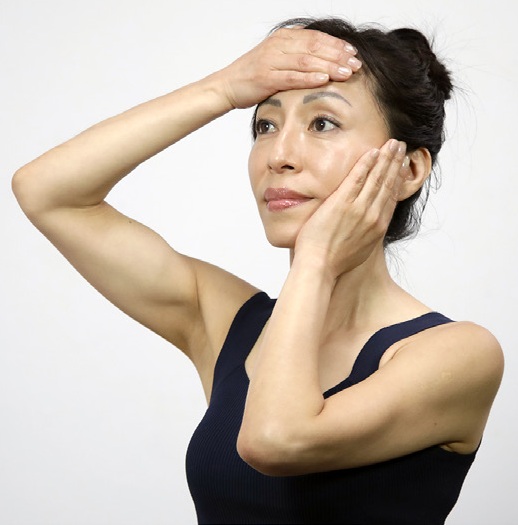
Habitual tension — the kind that comes from chronic stress, screen use, or unconscious expressions held for hours — compresses facial tissue repeatedly without any release. That repeated compression, over years, contributes to lines. Face yoga works in the opposite direction. Every exercise is performed slowly, with conscious breath, deliberate muscle engagement, and specific hand placement that controls exactly which muscles are activated and which are kept still.
The distinction matters. A frown held unconsciously for eight hours a day is not the same as a controlled 10-second exercise performed with intention and released fully.
What Actually Causes Wrinkles
Understanding why wrinkles form makes it easier to see why face yoga addresses them rather than creating them.
Wrinkles develop for two primary reasons. First, the facial muscles weaken and lose volume with age — and because the skin is attached to the underlying muscles, it descends as the muscles do. This is why nasolabial folds, jowls, and eye area changes are structural, not just surface-level. Second, chronic tension in specific muscle groups — particularly the corrugator supercilii between the eyebrows and the masseter along the jaw — compresses tissue repeatedly, eventually leaving a permanent impression.
Skincare products work on the skin’s surface. They can hydrate, protect, and improve texture — but they cannot lift a weakened muscle or release a chronically contracted one. Face yoga addresses both: it strengthens the muscles that have lost tone and releases the muscles that are holding unnecessary tension.

When Face Yoga Can Go Wrong
Face yoga practiced incorrectly does carry a risk of reinforcing tension patterns rather than releasing them. This is why technique matters — and why Fumiko has spent over two decades refining exactly how each exercise is performed.
The three most common mistakes that can work against you:
Holding your breath. When the body is under stress, the facial muscles tighten in response. Holding the breath during an exercise adds tension to the very muscles you’re trying to train. Every face yoga exercise is performed with slow, deliberate nasal breathing — the breath is part of the practice, not an afterthought.
Poor posture. Tension in the neck and shoulders travels directly into the face. Practicing with hunched shoulders or a forward head position means the facial muscles are already under strain before the exercise begins. Sitting tall with relaxed shoulders is the foundation every session is built on — not just a formality.
Activating the wrong muscles. The most common example is the forehead engaging during eye or cheek exercises. When the frontalis — the forehead muscle — activates unnecessarily, it creates the kind of repetitive movement that does contribute to horizontal lines. Face yoga uses precise hand placement to isolate the target muscles and keep uninvolved muscles still. A mirror is essential in the early weeks so you can verify exactly what’s moving.
How Face Yoga Is Designed to Prevent Wrinkles, Not Cause Them
The Face Yoga Method is built around three principles that directly counteract the conditions that create wrinkles.
Controlled resistance. Each exercise uses the hands to create specific resistance against the target muscle. This means the muscle works against a controlled force — not against unconscious habit or gravity. The resistance is precise, the movement is deliberate, and the release is complete.
Release alongside strengthening. Face yoga incorporates massage and acupressure alongside strengthening exercises. Chronically contracted muscles — common in the jaw, forehead, and around the eyes — need to be released before they can be retrained. Exercises that only strengthen without releasing can reinforce existing tension patterns. The FYM approach addresses both in the same practice.
Breath and awareness. Conscious breathing during practice keeps the nervous system calm and the facial muscles relaxed between movements. This is the “yoga” dimension of face yoga — the practice trains not just the muscles but the habit of bringing awareness and intention to how you use your face.

What to Expect When You Practice Correctly
Most Face Yogis who practice with correct technique report the opposite of what they feared — their face feels more relaxed, not more tense, after a session. The combination of targeted strengthening and deliberate release produces a sense of ease in the jaw, forehead, and eye area that carries through the day.
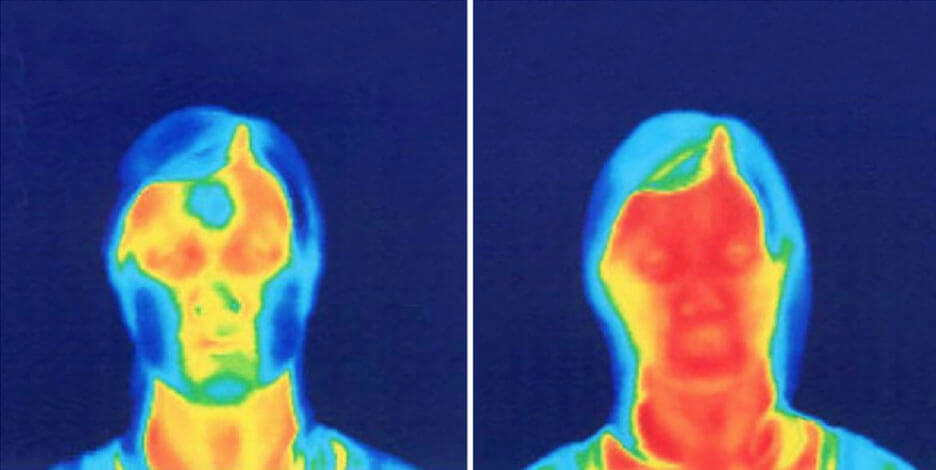
The change isn’t only something you feel — it’s visible. A thermographic image taken after just 30 seconds of the Big O, one of our signature exercises, shows a clear increase in blood circulation across the face. That increased blood flow is what delivers oxygen and nutrients to the skin and supports collagen production — something no cream can do from the surface.
Structurally, consistent correct practice produces gradual, cumulative improvement. The muscles strengthen over weeks, the chronic tension patterns release over the same period, and the face begins to reflect both changes — more definition where there was softness, more ease where there was tension.
The timeline varies depending on how much muscle tone has been lost and how consistently the practice is maintained. Most Face Yogis notice a meaningful difference within four to six weeks of daily practice.
FAQ
Does face yoga cause wrinkles? Face yoga practiced correctly does not cause wrinkles. The concern arises from conflating unconscious repetitive tension — which does contribute to lines over time — with deliberate, controlled muscle training. Face yoga uses precise hand placement, conscious breathing, and specific muscle isolation to ensure the right muscles are activated and uninvolved muscles remain still. When technique is correct, face yoga strengthens and releases the facial muscles rather than creating new tension patterns.
Can facial exercises make wrinkles worse? Facial exercises performed incorrectly — without breath awareness, without isolating the correct muscles, or with poor posture — can reinforce existing tension patterns. The most common example is the forehead engaging during eye or cheek exercises. Face yoga is designed with specific hand placement and breathing instructions to prevent this. Practicing in front of a mirror in the early weeks helps verify that only the target muscles are moving.
What is the difference between expression lines and face yoga? Expression lines develop from unconscious repetitive movements held over years — chronic squinting, frowning, or jaw clenching. Face yoga is deliberate, controlled, and brief — typically 10 seconds per exercise, performed with full release between repetitions. The mechanism is different: one is habitual compression, the other is intentional training followed by complete release.
How long does it take for face yoga to reduce wrinkles? Most Face Yogis practicing daily with correct technique notice a difference within four to six weeks — a more relaxed jaw, reduced forehead tension, improved definition in the cheeks and eye area. More significant structural changes typically appear between six and ten weeks. The results are cumulative: the longer the practice is maintained, the more pronounced the improvement.
Is face yoga safe for all skin types and ages? Face yoga is safe for all skin types, all genders, and all ages when practiced with correct technique. The exercises use controlled resistance through hand placement rather than pulling or tugging at the skin. People in their 20s and 30s benefit from building muscle tone and releasing habitual tension early. Those in their 40s, 50s, 60s, and beyond see structural restoration from consistent daily practice.
Do I need a teacher to practice face yoga safely? A certified teacher significantly reduces the risk of practicing with incorrect technique — particularly the habit of activating uninvolved muscles. In the early weeks, practicing with guided instruction ensures correct hand placement, breathing, and muscle isolation from the start. The Face Yoga Method has 1,053 certified teachers across 91 countries, and guided programs are available for every level.
Ready to see what face yoga actually does to your face? Join Fumiko’s free Full Face Workout class — 15 minutes, guided step by step.