

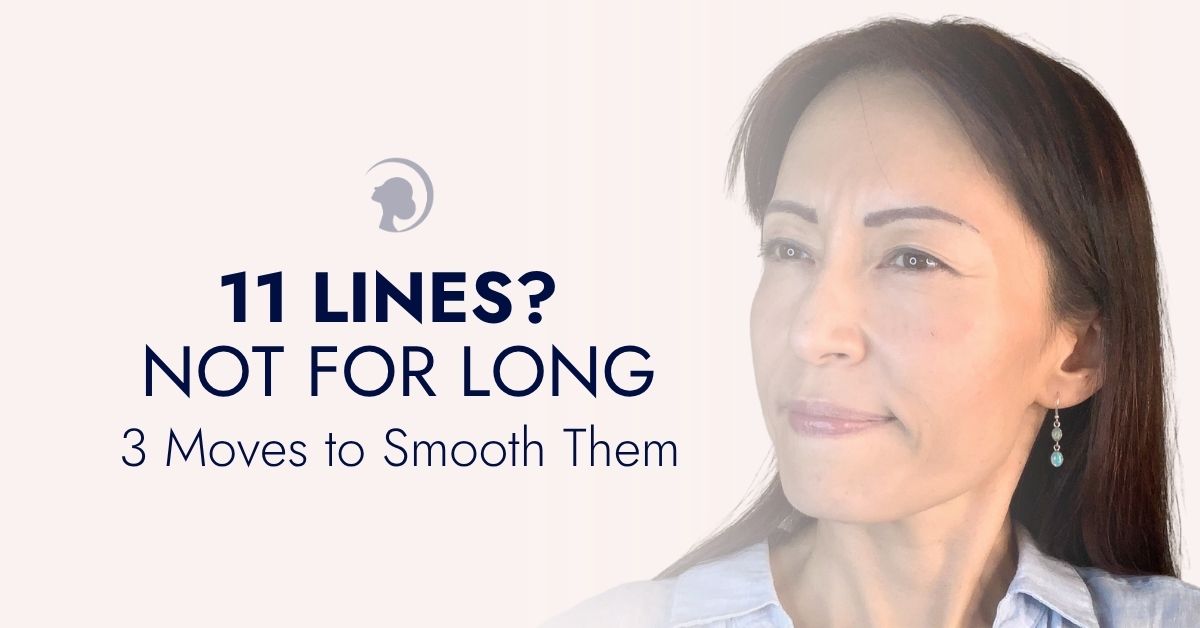
Do you catch yourself frowning — not because you’re upset, but just because that’s where your face has landed? You’re not alone, and it’s not a character flaw. It’s a habit. And habits can change.
Frown lines — the two vertical creases between the eyebrows often called 11 lines, or glabellar lines in clinical terms — develop from repeated muscle contraction and habitual expression. The good news is that’s exactly what face yoga addresses. If you want the deeper clinical breakdown of this specific area, this guide to glabellar lines covers it in detail.
What Actually Causes Frown Lines
I remember my mother catching me frowning when I was younger — not because I was angry or upset, but just as a subconscious habit while I was talking or concentrating. She’d say, “Fumiko, you are frowning.” I wasn’t even aware I was doing it.
That early awareness shaped everything about how I teach face yoga now.
The corrugator supercilii — the small muscle between the brows that pulls the eyebrows together when you frown — is one of the most habitually overworked muscles in the face. Every time you squint at a screen, concentrate hard, feel stressed, or drive in bright light, it contracts. Do that for hours every day across years, and the lines it creates stop being temporary expressions and become permanent features.
There’s also a fascinating mind-body connection here. Research has found that people with deep lines between the brows tend to generate more negative emotion — the muscle contraction itself sends a signal to the brain. Which means face yoga practice in this area isn’t just about how you look. It’s a mood practice too.
The other main contributors — sun exposure, collagen decline with age, and dehydration — are real but slower-moving. The habit of unconscious frowning is the one you can start addressing today.

The Awareness Habit That Matters as Much as the Practice
Before we get to poses, there’s something worth knowing: one of the most effective things you can do for frown lines isn’t a pose — it’s awareness.
One of the most powerful shifts I’ve seen in Face Yogis is when they start catching themselves mid-frown. Driving. Looking at a screen. Applying skincare in the mirror. The tension between the brows is there not because of emotion but because it’s become the default resting position of the face.
A few simple daily habits that make a real difference:
- Before bed, take 30 seconds to consciously relax the space between your brows. You don’t want to sleep with that tension held all night.
- Once an hour, check in with your forehead. Is it tense? Release it. Soften the brow. Let it drop.
- Wear sunglasses outdoors — squinting is one of the fastest ways to deepen lines between the brows.
These habits work alongside the face yoga practice. One without the other produces slower results.
3 Face Yoga Poses for the Frown Line Area
Sit tall with a relaxed neck and shoulders before you begin, and breathe deeply through your nose. Release any held tension in your jaw and forehead before starting — beginning from release means every pose works on the muscle directly.
Want to follow along with Fumiko? Watch the full forehead and frown lines routine here:
Pose 1: No More 11 Lines
This pose trains the corrugator supercilii directly — working by simultaneously contracting and resisting, building awareness and control of a muscle that most people have never consciously engaged.
- With your forehead relaxed, place your index and middle fingers between your eyebrows. Gently spread your fingers.
- Frown your eyebrows but create resistance with your fingers.
- Hold for 5 seconds.
- Come out from the pose and relax.
The resistance is what makes this pose work — your fingers hold the skin smooth while the muscle underneath engages. That combination trains the muscle to release more fully at rest.
Pose 2: Forehead Acupressure Point Push
This pose releases tension stored across the full forehead — tension that contributes directly to lines between the brows. It boosts circulation and creates immediate relief in the area.
- Make fists with both hands and place your middle and index finger knuckles on the center of your forehead.
- Apply firm pressure and slowly slide your knuckles along your forehead to the sides, 5 times.
- Come out from the pose and relax.
You should feel warmth spreading across the forehead as you do this. That’s circulation moving into an area that tends to hold chronic tension.
Pose 3: Instant Pick Me Up
This pose lifts the forehead and softens the lines between the brows while addressing posture and mood at the same time — one of the most complete poses in the FYM practice for the upper face.
- Place both thumbs on top of your head and the rest of your fingers on your eyebrows.
- Breathe in while moving your fingers up to lift your forehead and lift the chin slightly.
- Breathe out and slide your palms down along the sides of your head, the side of your neck, your chest toward your armpits, and down the sides of your body.
- Come out from the pose and relax.
The downward slide at the end drains tension from the face and neck — you’ll feel it immediately. Fumiko calls this one of her favourites.
For another effective pose for this area, this post walks through the Forehead Lift technique in detail.
The Before-Bed Practice
One of the most effective times for this area is in the last few minutes before sleep. The corrugator supercilii holds tension throughout the day — by the time you lie down, it’s been contracting for hours. Releasing it before bed means you’re not sleeping with that compression locked in all night.
Spend two minutes before sleep on the No More 11 Lines pose and a forehead release. Over weeks, this compounds. Many Face Yogis notice the lines looking softer in morning photos before they notice any change at midday — because they’ve stopped reinforcing the tension overnight.
For a deeper look at how face yoga works and what drives results, this post covers the full picture.
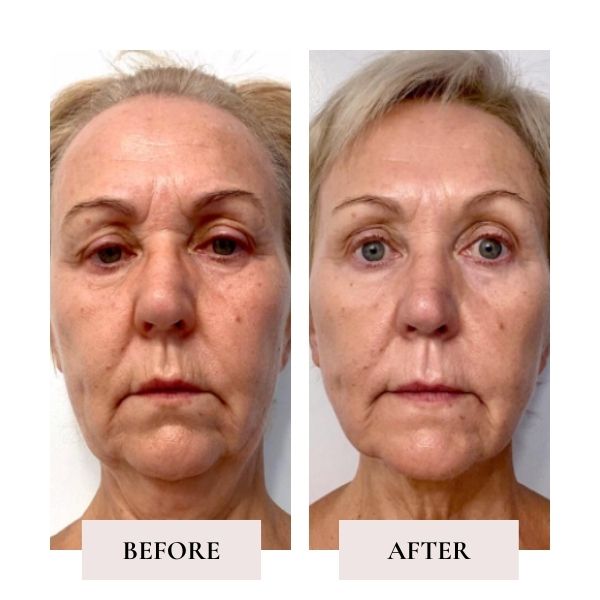
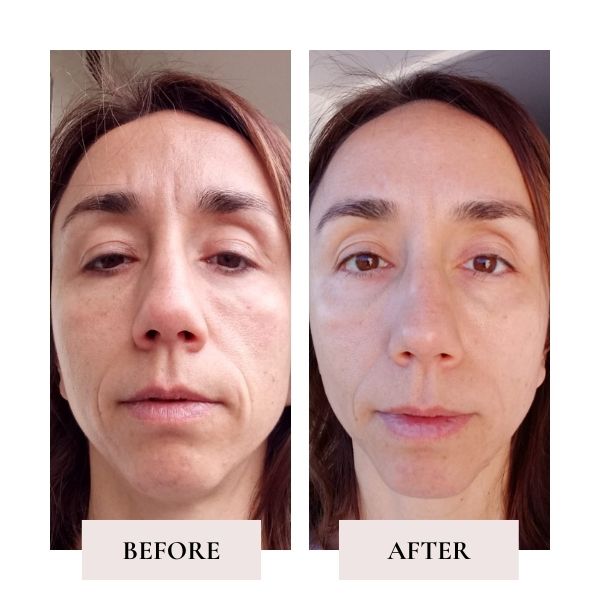
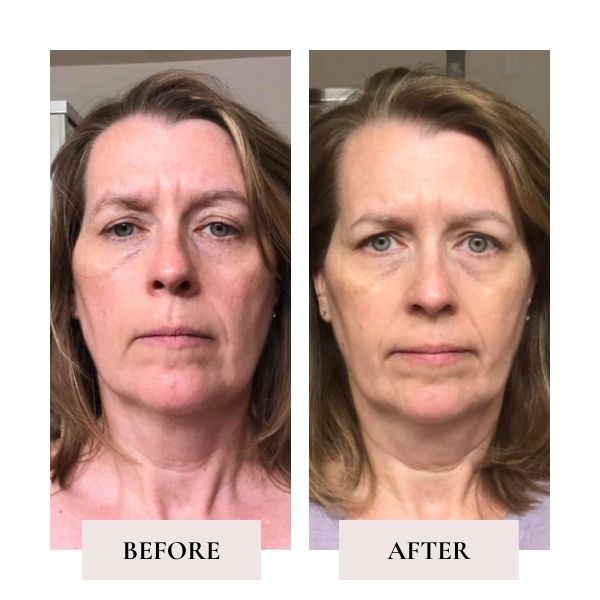
What Real Face Yogis Experience
Mary noticed changes within her very first week:
“I think you can see that my eyes are opening up more and my forehead lines are softening already. I am amazed, delighted and very encouraged to keep going. I’m 68 years young.” ~ Mary
Early results in the forehead area are common — the corrugator and surrounding muscles respond quickly when the habit of tension is interrupted by consistent practice.
What to Expect and When
Face yoga practice works on frown lines through two things happening at once: the poses building muscle awareness and releasing tension, and the daily habit work interrupting the unconscious contraction that created the lines in the first place.
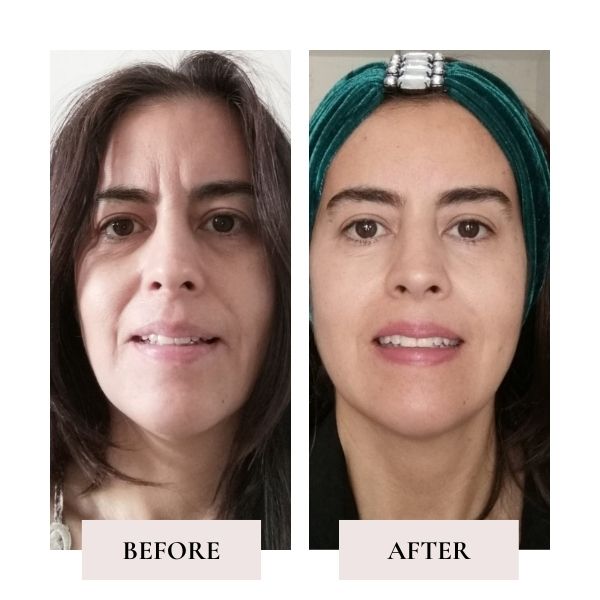
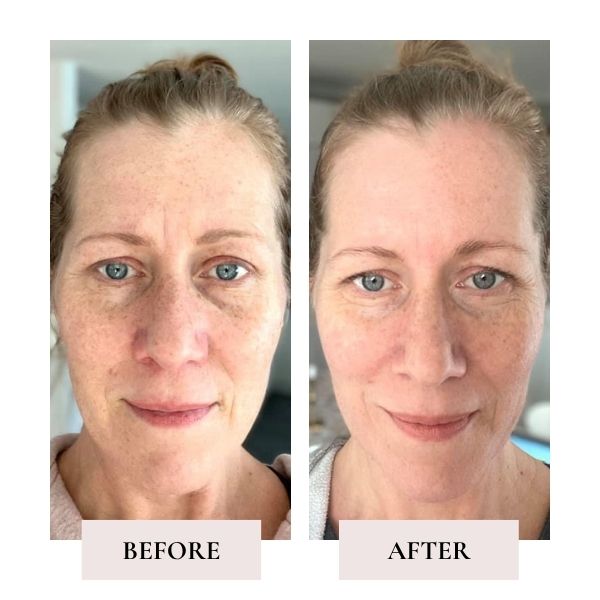
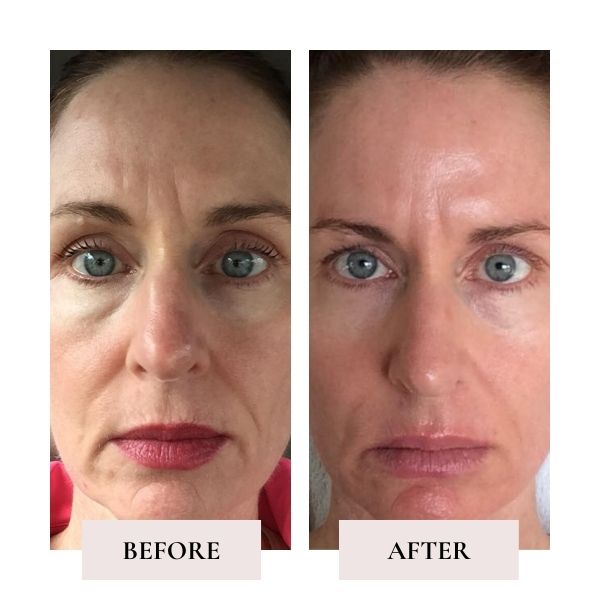
Most Face Yogis notice the space between their brows feeling softer and less tense within the first week or two of daily practice. The lines themselves — particularly the shallower ones — begin to fade between weeks three and six. Deeper 11 lines take longer, but they do soften with consistent daily work over time.
FAQ
Does face yoga work for frown lines?
Yes — when practiced consistently alongside habit awareness. Frown lines develop primarily from the repeated contraction of the corrugator supercilii. A consistent face yoga practice works by training that muscle to release, building awareness of unconscious tension between the brows, and restoring circulation to an area that tends to hold chronic compression. The poses address the muscular cause; the habit work prevents it from being reinforced daily.
How long does it take to see results?
Most Face Yogis notice the forehead feeling less tense within the first one to two weeks of daily practice. Visible softening of the lines between the brows typically becomes clear between weeks three and six. Deeper 11 lines respond more slowly but do improve with consistent work over several months.
Can face yoga reduce frown lines without procedures?
Many Face Yogis have seen significant reduction in their frown lines through consistent face yoga practice alone. The mechanism is different from procedures — face yoga works on the muscle and the habit, not by temporarily addressing the surface — which means results develop more gradually but work with the underlying cause.
How often should I practice?
Daily — ten minutes is sufficient. The corrugator supercilii responds to regular stimulus. Short daily sessions compound more effectively than longer sessions done occasionally. The before-bed practice is particularly valuable for this area.
What’s the difference between frown lines and forehead wrinkles?
Frown lines — the 11 lines — are the vertical creases between the eyebrows, caused primarily by the corrugator supercilii contracting. Forehead wrinkles are the horizontal lines across the forehead, caused by the frontalis muscle — the broad muscle across your forehead — lifting the brows. They often appear together and are addressed by overlapping poses, but they’re caused by different muscles and habits.
If you want a structured starting point for the forehead and eye area, download the free eyes and forehead exercise guide here — poses you can start today, no cost, no commitment.