The short answer is yes — with one important condition. Face yoga works when practiced correctly and consistently. The muscles of the face respond to training the same way the muscles of the body do: they strengthen with regular stimulus, lose tone without it, and the face reflects both states over time.
Why the Question Is Worth Asking
If you’re not yet familiar with the practice itself, this guide to what face yoga actually is is worth reading first — it covers the definition and mechanics before you weigh the evidence here.
Skepticism about face yoga is reasonable. The claims made by some corners of the wellness industry around facial fitness are vague, the before-and-afters on social media are easy to dismiss, and the idea of deliberately exercising your face can seem, at first, more theatrical than scientific.
But the question deserves a direct answer grounded in what we actually know — about how facial muscles work, what the research shows, and what consistent practitioners experience over time.
What the Research Shows
The most significant piece of evidence is the 2018 study published in JAMA Dermatology at Northwestern University. Researchers tracked 16 participants who practiced facial exercises for 20 weeks. Blinded dermatologists assessed participants before and after using a standardised facial aging scale.
The finding: participants showed measurable improvement in cheek fullness — upper and lower — attributed to muscle hypertrophy. The facial muscles, trained consistently, grew in volume. That growth restored structure and definition to the face from beneath the skin.
This is the same mechanism that makes body exercise work. It is not unique to the face — it is basic muscle physiology applied to an area most people have never trained deliberately.
Why Facial Muscles Matter More Than Most People Realise
Most people attribute facial aging primarily to skin — the skin loses elasticity, thins, and sags. Skincare addresses this layer. But the skin is attached to the underlying facial muscles, and as those muscles lose tone and volume with age, the skin descends with them.
This is why nasolabial folds deepen, jowls develop, the eye area loses definition, and the neck changes — these are structural changes driven by muscle loss, not skin changes alone. Addressing only the surface doesn’t reach the cause.
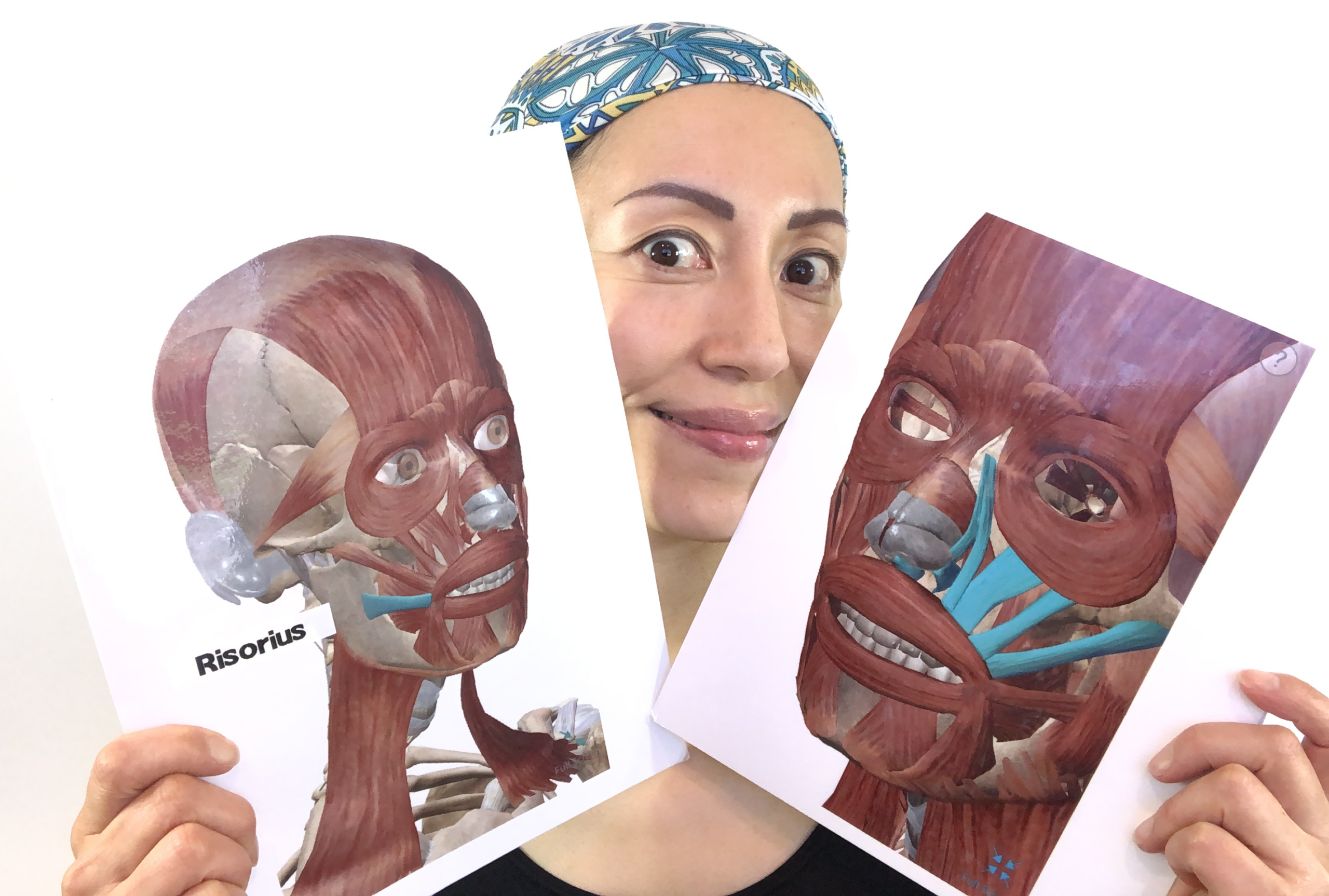
Face yoga trains the muscles directly. The zygomaticus major — the muscle running from the cheekbone to the corner of the mouth — determines mid-face definition. The orbicularis oculi surrounds the eye and governs the eye area. The platysma runs from the chest through the neck to the lower face, and its tone determines lower face support. The frontalis governs the forehead. When these muscles are trained regularly, the face reflects that training structurally — not just superficially.
What Face Yoga Actually Involves
Face yoga is not just muscle exercises. The Face Yoga Method combines three elements that work together within a daily practice.
Targeted strengthening exercises build muscle tone and volume over time using precise hand placement to create controlled resistance. The resistance is deliberate and specific — the hands isolate the target muscle and keep surrounding muscles still.
Massage and acupressure support circulation, lymphatic drainage, and the release of chronic tension — particularly in the jaw, neck, and eye area. Chronic tension compresses facial tissue and contributes to lines and heaviness. Releasing it is as important as strengthening.
Breathwork and posture keep the nervous system calm and the facial muscles relaxed between movements. Tension held in the neck and shoulders travels directly into the face. Every exercise begins with deliberate nasal breathing and an upright, relaxed posture — not as formality, but as function.
The combination is what makes face yoga more effective than isolated facial exercises. Strengthening without release can reinforce tension patterns. Release without strengthening produces only temporary results. Together, they produce cumulative structural change.
What Results Look Like and When to Expect Them
Fumiko Takatsu has observed the following pattern consistently across the Face Yoga Method community of 764,000+ practitioners:
Weeks 1–2: The face feels more awake and alive after practice. Improved circulation produces a brightness in the skin. The exercises feel unfamiliar but the effect is immediate.
Weeks 3–4: Early structural changes begin to appear — a firmer jaw area, slightly lifted cheeks, reduced tension in the forehead and around the eyes.
Weeks 6–10: More pronounced definition — a cleaner jawline, more lifted mid-face, reduced nasolabial fold depth, improved neck posture.
Beyond 10 weeks: Continued cumulative improvement. Face Yogis who maintain the practice for three months and beyond consistently report the most significant changes — and those who stop notice the face beginning to revert within weeks, confirming the muscular mechanism is real and ongoing.
Results vary depending on consistency of practice, technique, and the degree of muscle loss at the point of starting. Ten minutes of correct daily practice consistently outperforms longer sessions done sporadically.
The Condition: Technique Matters
Face yoga works — but only when practiced correctly. This is the part that gets omitted in casual coverage of the topic.
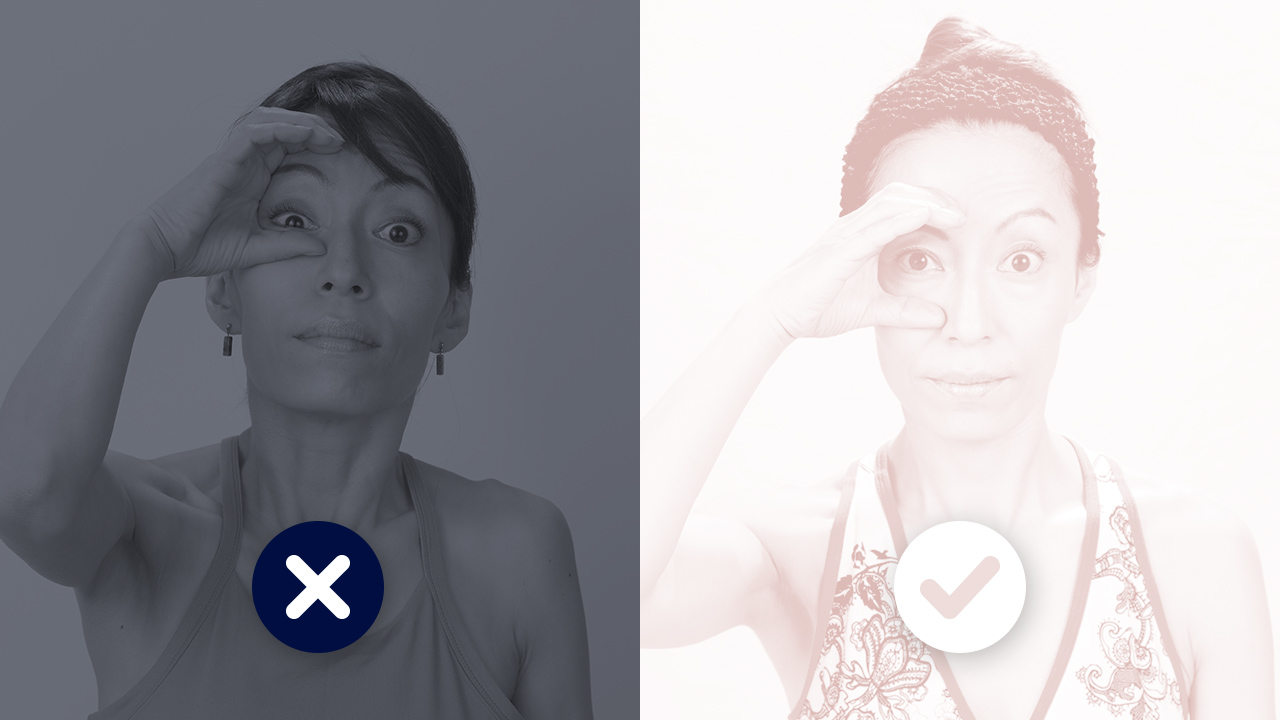
Incorrect technique — activating the wrong muscles, holding the breath, practicing with poor posture — can reinforce tension patterns rather than releasing them. The most common example is the forehead engaging during eye or cheek exercises. When this happens, the practice is working against itself.
Correct technique requires knowing precisely which muscles to activate, which to keep still, and how to use the hands to create the right resistance. This is why guided practice, particularly in the early weeks, produces significantly better results than self-directed exercises from random online sources.
Does Face Yoga Work for Everyone?
Face yoga is effective across all ages, all genders, and all skin types. The facial muscles respond to training at any age — the physiology does not change. People in their 30s benefit from preventive tone maintenance. Those in their 40s, 50s, 60s, and beyond see structural restoration from consistent daily practice.
The degree of change depends on two factors: how much muscle tone has been lost and how consistently the practice is maintained. Neither age nor genetics determines whether face yoga works — consistency and technique do.
FAQ
Does face yoga actually work? Yes — face yoga works by strengthening and toning the muscles of the face and neck through targeted daily exercises. Consistent facial exercise causes muscle hypertrophy, restoring volume and structure from beneath the skin. See “What the Research Shows” above for the specific study behind this.
How long does face yoga take to work? Most practitioners notice their face feeling firmer and more toned within two to three weeks of daily practice. Visible structural changes — lifted cheeks, cleaner jawline, reduced eye area heaviness — typically appear between four and six weeks. More significant improvement is observed between six and ten weeks of consistent daily practice.
How many minutes a day does face yoga require? Ten minutes of targeted daily practice is the Face Yoga Method standard. Consistency matters more than duration — ten focused minutes every day produces better results than longer sessions done occasionally. As the practice develops, sessions can extend to 20–30 minutes.
Does face yoga work for all ages? Face yoga is effective at all ages and for all genders. The facial muscles respond to training regardless of age. People in their 30s benefit from building and maintaining tone early. Those in their 40s, 50s, 60s, and beyond see structural restoration — lifted mid-face, reduced jowling, improved jawline definition — from consistent daily practice.
Is there scientific evidence that face yoga works? Yes. The 2018 JAMA Dermatology study by Alam et al. at Northwestern University tracked 16 participants over 20 weeks of facial exercise practice. Blinded dermatologists observed measurable improvement in cheek fullness, attributed to muscle hypertrophy — the same mechanism that makes body exercise work. The study confirms that facial muscles respond to training and that the response produces visible structural change.
Why do some people not see results from face yoga? The most common reasons are inconsistency and incorrect technique. Sporadic practice does not provide the regular stimulus the muscles need to respond. Incorrect technique — particularly activating the wrong muscles or holding the breath — can work against the practice rather than supporting it. Guided programs with correct instruction from the start produce significantly better outcomes than self-directed practice.
Can face yoga replace Botox or fillers? Face yoga does not replicate the immediate results of injectables. It works gradually and cumulatively — the results build over weeks and months of daily practice. For those who want to avoid procedures, face yoga addresses the muscular cause of facial aging rather than treating the surface effect. Many Face Yogis use face yoga alongside professional treatments to extend and maintain results between sessions.
The evidence is clear and the mechanism is sound. What determines whether face yoga works for you is the same thing that determines whether any practice works: how consistently and correctly you do it. Start with Fumiko’s free 5-pose guide and build your practice from there.
Hi. My name is Punitha. I have been watching some of your videos in Facebook. I really like them. I need help for getting rid of wrinkles around my eye area, forehead, my neck, to get rid of dark spots and to have a bright and clean skin.
Hi Chika, all our courses are pre-recorded classes but Fumiko guides you through every repetition besides having amazing bonuses with tips and recipes 🙂
Hello!
I bought the neck & jawline jumpstart 2 weeks ago & I´m really happy with it. I wonder if I can still use it when finish the 28 days. Is it a lifelong course? I want to do it every single day!
Thanks
hi how’s I can reduce black spots on my face with youga exercise and can remove wrinkles for example laugh line from yougha plz guide me from picture and only picture showing exact way to reduce
I believe on face yoga but I already have very toned means thin , almost no flesh on my chick. I want to increase my face fat & get rid of deep laugh line and wrinkles as well. I have digestion problem.
Dear Fumiko, It was surprisingly hilarious to know they invited you on a comedy show. Such ignorant people… they must be unaware about the importance and benefits of Facial Yoga. I am also impressed with the fact that you did the radiation experiment to prove your point. It shows me how serious you are about your stuff. Thanks and keep doing awesome work.
Hi Safia, we’re so glad you want to join us, you can check out our Programs under the courses section on our website or use the search feature to look through our blog for many free resources








Good morning, I would like to ask you ifI would like to become a face yoga techer ? How is working? Is any online lessons? Regards Rasa
You can head to the “Courses” page to find more information on our Teacher Certification Course 🙂
Am interested please
Yay, you can head to the “Courses” page to find all of our Programs! 🙂
Hi. My name is Punitha. I have been watching some of your videos in Facebook. I really like them. I need help for getting rid of wrinkles around my eye area, forehead, my neck, to get rid of dark spots and to have a bright and clean skin.
Hi Punitha, we’re glad you have been enjoying our content, can’t wait to see your progress 🙂
Wow
Quisiera dar mis reseñas de productos
Beautiful
Yes i think it is verey good method for man
Hy. My name is Asad. I love your effort. Plzzz keep it up. V good
Hey am really interested.. any online session?
Hi Chika, all our courses are pre-recorded classes but Fumiko guides you through every repetition besides having amazing bonuses with tips and recipes 🙂
Hello!
I bought the neck & jawline jumpstart 2 weeks ago & I´m really happy with it. I wonder if I can still use it when finish the 28 days. Is it a lifelong course? I want to do it every single day!
Thanks
Hi Vega! You get lifetime access to any programs you purchase, so you restart at any time 🙂
hi how’s I can reduce black spots on my face with youga exercise and can remove wrinkles for example laugh line from yougha plz guide me from picture and only picture showing exact way to reduce
Hi Noreen, you can use the search bar here on the blog to see alternatives to reduce dark spots 🙂
I’m very interested in this exercise. Can I start immediately?
Of course, Bellington! We’re sure we have the perfect program for you, if you need a recommendation reach out to us at [email protected] 🙂
Good night
Hi,where can i see your videos please share ne the link mam
Hi Gauathri 🙂 You can head to the “Courses” page to find all of our Programs!
I believe on face yoga but I already have very toned means thin , almost no flesh on my chick. I want to increase my face fat & get rid of deep laugh line and wrinkles as well. I have digestion problem.
Hi there, we have tips on how to achieve a meatier face, take a look here on our blog or at our youtube channel 🙂
These tips are full of insights and somehow these will gonna improve my facial routine.
Thanks for sharing this great piece of information.
Thank you for tuning in, Keanu 🙂
i need a face yoga. want to help?
Hi Jessica, please reach out to our customer support if you would like to receive a program recommendation at [email protected] 🙂
hi i would like to know if face yoga helps on geting more face muscles active to do better immpressions of people?
I am 75 can face excersise help me
Yes! It’s never too late to start, Face Yoga works for all ages 🙂
Hi Fumiko
I am 57 years old and have jowls. eyebags and a turkey neck. Can the face yoga eliminate these troubled areas?
Thank you.
Steffi
We have different programs that can help you work on those concerns, take a look at our Courses page to find the perfect one for you! 🙂
Dear Fumiko, It was surprisingly hilarious to know they invited you on a comedy show. Such ignorant people… they must be unaware about the importance and benefits of Facial Yoga. I am also impressed with the fact that you did the radiation experiment to prove your point. It shows me how serious you are about your stuff. Thanks and keep doing awesome work.
It is important to us , the face yoga method. So hurry, we all try this one now.
Can I please get the link. I want to join
Hi Safia, we’re so glad you want to join us, you can check out our Programs under the courses section on our website or use the search feature to look through our blog for many free resources
I love it
Thank you for sharing Face Yoga
We’re glad to help, Edna 🙂
Cúanto cuesta ?
Acabamos de lanzar nuestro Bootcamp en español, Luppy, envíanos un mensaje a [email protected] para que podamos ayudarte 🙂